MBA LEADERSHIP
MBA Tech Club
VP of Special AI Events
UW Foster · 2025–2026 · Second year of MBA
Organized AI building experiences for Foster MBA students, from redesigning a cross-program hackathon to leading a hands-on vibe-coding session.
Giving MBA students a way to build with AI
As VP of Special AI Events for the MBA Tech Club, I wanted to give business students a practical way to build with AI. We started by trying to revive a business-school hackathon that had stopped before COVID. The goal was to bring MBA students together with software engineers and students from other programs, so business judgment and technical skills could turn an idea into a working prototype.
AI gave us a reason to rethink who could participate and how teams would work. With vibe coding, where you describe what you want in plain language and an AI tool writes the code, business students could help build the product, not only define the problem, customer, and business value. We designed the challenge so people from any background could contribute, whether or not they could code.
I formed an organizing team, created a tracker, delegated responsibilities, and coordinated challenge design, participant experience, partnerships, and funding. We contacted the previous hackathon organizers to learn from their experience and understand what it would take to bring the event back. Our proposed three-day format moved from an initial prototype to building with mentor support, then final pitches and judging. I developed a sponsorship proposal to explain the experience and the ways partners could support it.
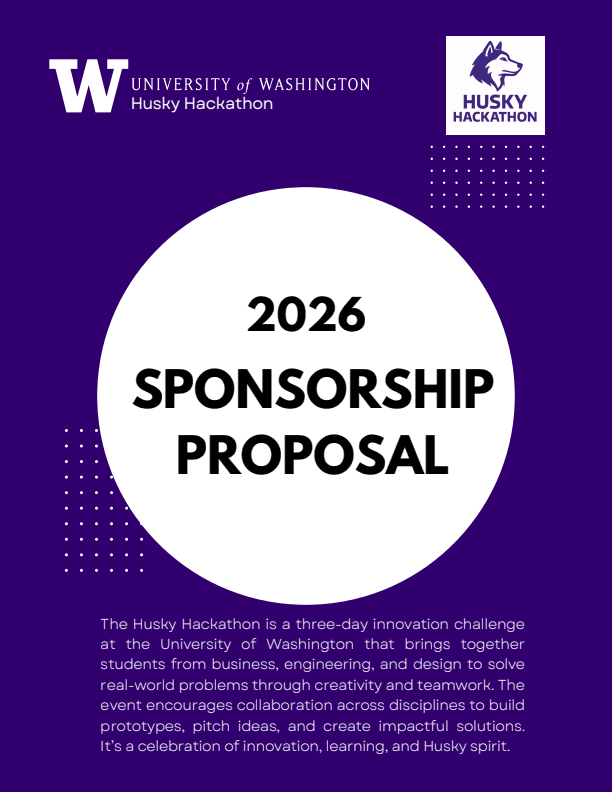
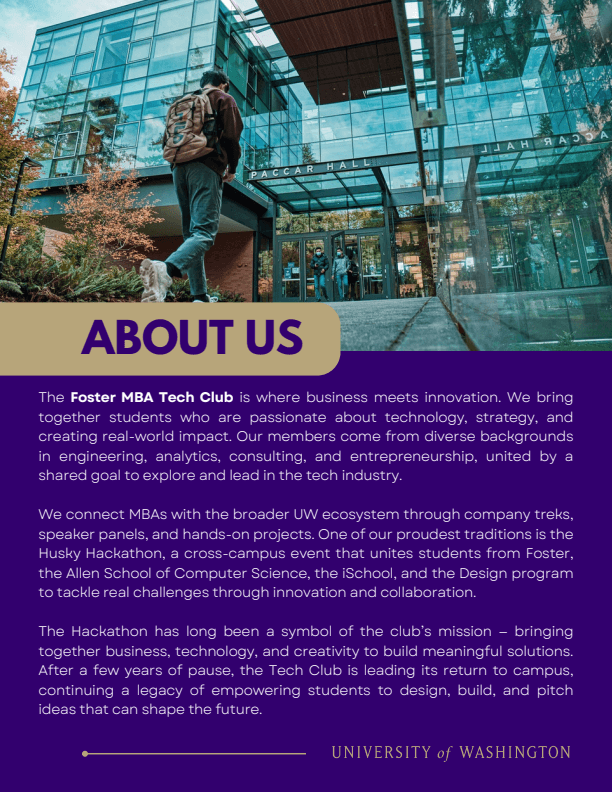
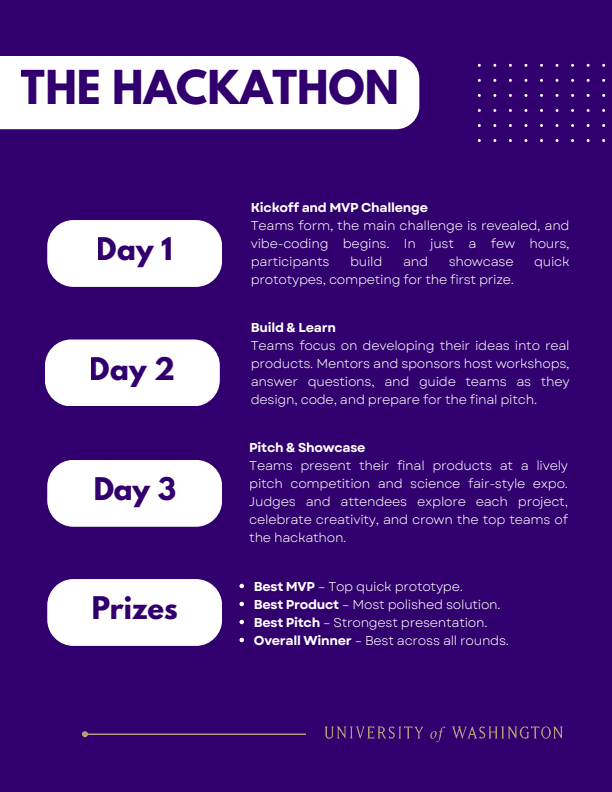
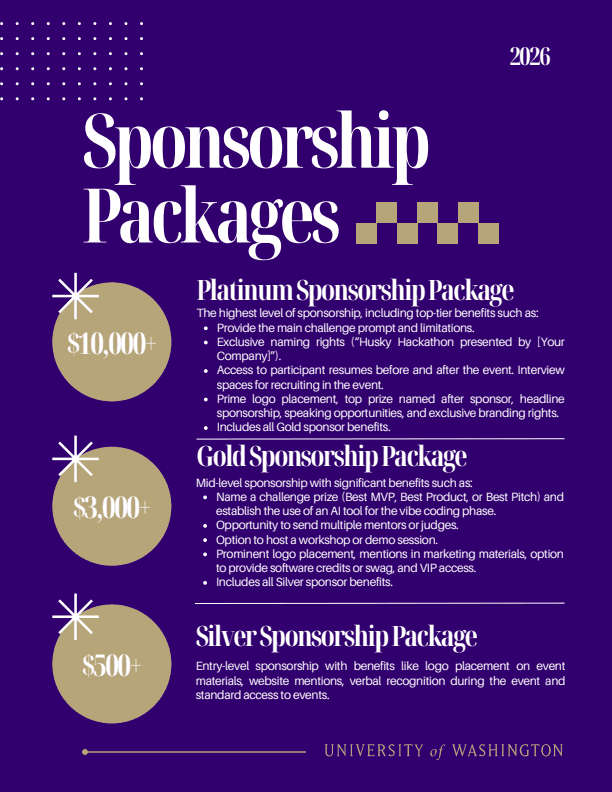
After defining the format, we approached clubs and companies. We built partnerships with groups willing to help, but did not secure the financial sponsorship needed for an event at that scale. I had to separate the goal, getting students to build with AI, from the budget and logistics of the original format. We reduced the scope and brought the experience into the Foster MBA community through smaller vibe-coding hackathons.
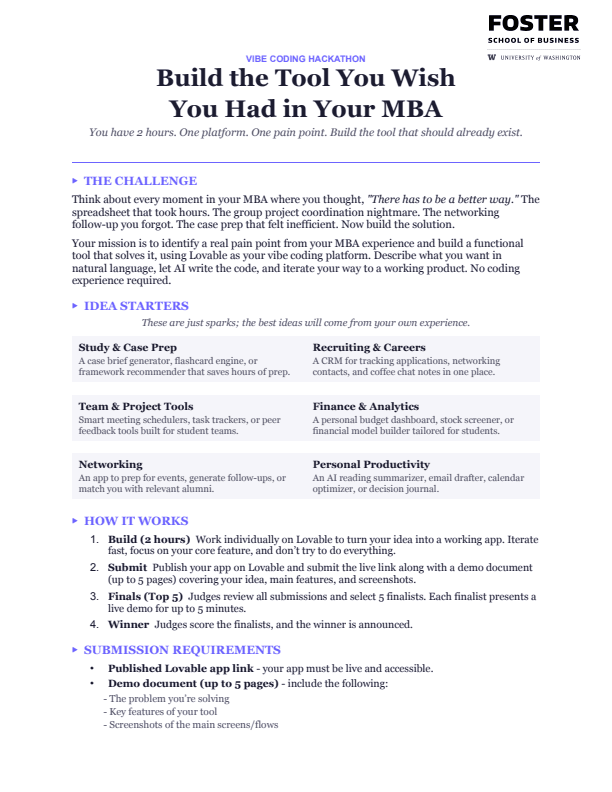
In April 2026, I led a vibe-coding session with the challenge “Build the Tool You Wish You Had in Your MBA.” Starting with a familiar problem made it easier for students to judge whether their idea would be useful. A workshop introduced the tools, followed by time to build with Lovable, an AI-assisted app builder. Participants then submitted a live app link and a short demo document explaining the problem, their solution, and how it worked.
Judging used four criteria: problem quality (25%), product thinking (30%), functionality (25%), and creativity and ambition (20%). Finalists presented their work and explained what they had built and why someone would use it. The ideas covered recruiting, scheduling, campus information, personal productivity, and other needs students knew from their own lives.
What participants created
Students built prototypes around the everyday problems they knew. Some were practical campus tools; others were more personal.
Ski-pass comparison
Compared ski passes against destinations, budget, and expected ski days.
Recruiting workspace
Connected target companies, job opportunities, contacts, and next actions in one place.
Travel-cost dashboard
Explored exchange-rate and flight-price timing with mock data.
Slack activity dashboard
Organized mentions, channel activity, and topics relevant to MBA students.
Campus food-event feed
Used AI to organize food-event information from Slack messages.
AI writing-style assistant
Turned examples of someone’s work into reusable instructions for an AI writing tool.
Wellness companion
Paired short wellness activities with progress tracking for busy students.
Career-event discovery
Filtered event opportunities by career interests.
Assignment planner
Turned pasted Canvas assignment information into deadline cards.
Personalized voice experience
Used conversational AI and text-to-speech for personalized voice interactions.
Weekly planning assistant
Built a weekly plan from a calendar screenshot, tasks, and constraints.
Shared calendar
Helped friends, family, and teammates find time together.
Voice journal
Organized spoken reflections and turned them into illustrated stories.
What I learned
When funding fell through, I asked which parts of the experience students actually needed. A familiar problem, accessible tools, and a chance to show their work mattered more than a large event. A smaller scope kept those three things and gave us a format we could run.